Signs and Symptoms of Cancer
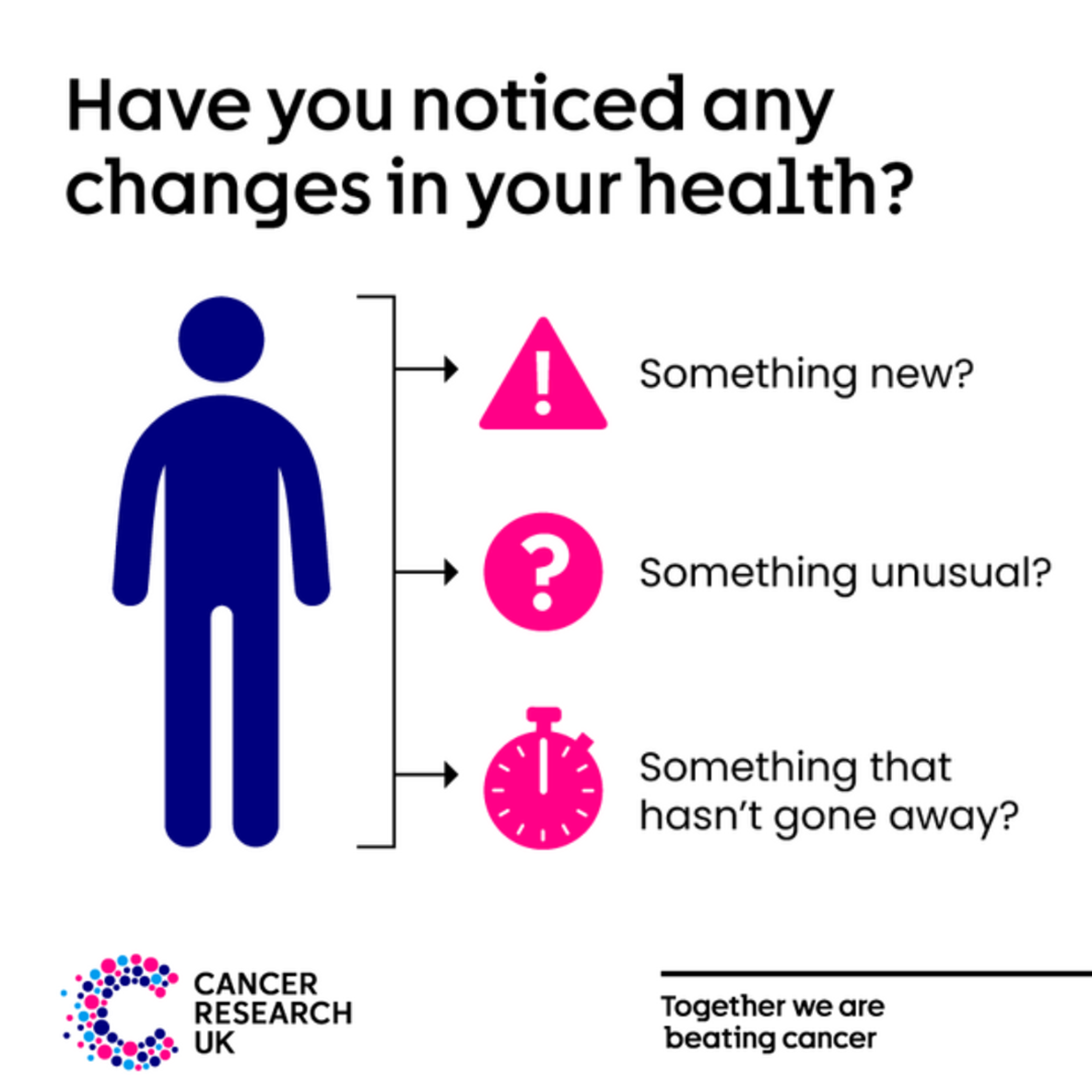
Spotting cancer at an early stage saves lives, so tell your doctor if you notice anything that isn’t normal for you or something that won’t go away.
There are over 200 different types of cancer that can cause many different signs and symptoms. Sometimes symptoms affect specific areas of the body, such as our tummy or skin. But signs can also be more general, and include weight loss, tiredness (fatigue) or unexplained pain.
Most signs and symptoms listed here are caused by something less serious than cancer - but if it is cancer, spotting it early can make a real difference. If you notice any changes that are not normal for you - don’t ignore it, speak to your doctor.
These are some of the key signs and symptoms of cancer:
- very heavy night sweats or fever
- feeling more tired than usual
- unexplained bleeding or bruising
- unexplained pain or ache
- unexplained weight loss
- an unusual lump or swelling anywhere in your body
- a new mole or changes to a mole
- skin changes, nail changes, or a sore that won't heal
- croaky voice, hoarseness or a cough that won't go away
- mouth or tongue ulcer that lasts longer than 3 weeks
- coughing up blood
- difficulty swallowing
- breathlessness
- persistent heartburn or indigestion
- unusual changes to the size, shape or feel of a breast, or chest, including nipple or skin changes
- persistent bloating or tummy pain
- appetite loss
- a change in bowel habit, such as constipation, looser poo or pooing more often
- blood in your poo or pee
- problems peeing
- unexpected vaginal bleeding, including after sex, between periods or after the menopause
If you spot anything that isn't normal for you - don't ignore it. Whether it's listed here or not get it checked out.
More information
The following links have more useful information about cancer:
- Cancer Research UK: signs and symptoms of cancer
- Macmillan Cancer Support: signs and symptoms of cancer
- Your GP or medical professional may refer you as an urgent suspected cancer referral for further tests and advice from a specialist. You can find out more information on this on the Cancer Research UK website.